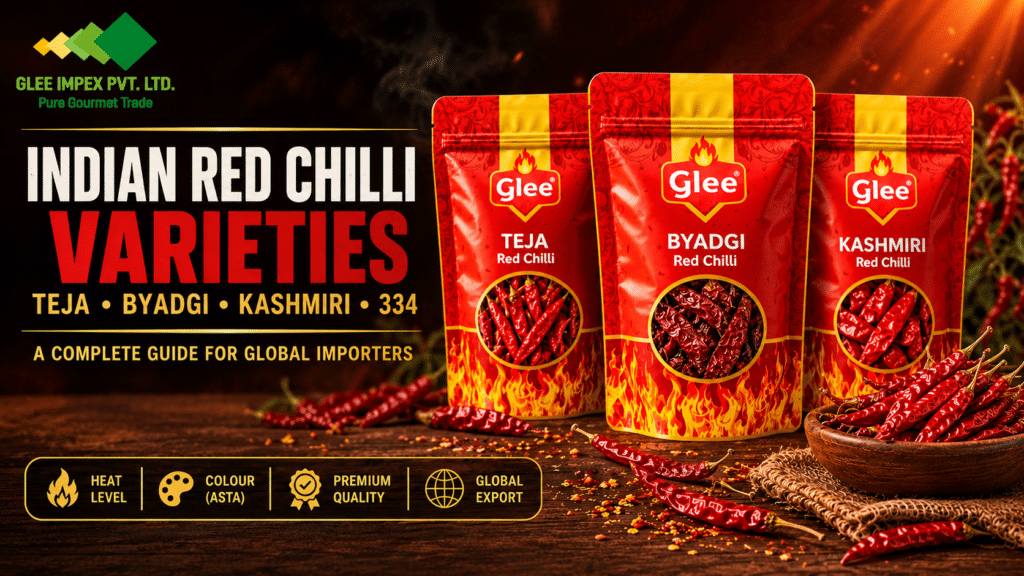
Indian Red Chilli Varieties: A Complete B2B Importer’s Guide to Heat, Colour, Quality and Commercial Applications
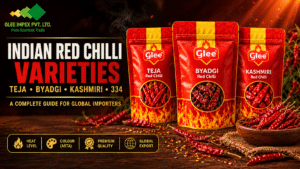
Indian red chilli varieties like Teja, Byadgi, Kashmiri and 334 are popular among global spice importers for their distinctive heat, vibrant colour and authentic flavour. Glee Impex Pvt Ltd delivers quality-assured chilli exports, backed by 35,000+ B2B orders, 5+ years of experience, 100% customer support and exports to 25+ countries. We help international buyers choose the right chilli varieties to meet their quality and market requirements.
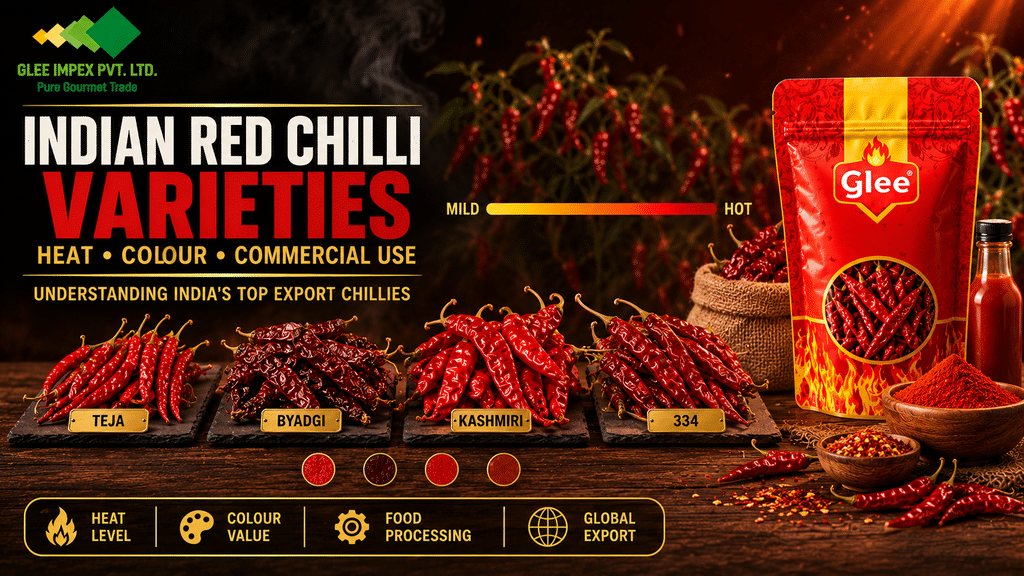
India is one of the world’s major producers and exporters of red chillies. Indian chillies are widely used in food processing, curry powders, sauces, ready-to-eat meals, restaurant kitchens and packaged spice products. However, not every chilli variety offers the same characteristics.
Some varieties are known for their high pungency, while others are preferred for their bright red colour, mild heat and attractive appearance. For importers, understanding these differences helps in selecting suitable raw materials according to the requirements of their target markets.
Among the most commercially recognised options are Teja, Byadgi, Kashmiri and 334. Each variety has its own characteristics in terms of heat level, colour intensity, shape, aroma and processing suitability.
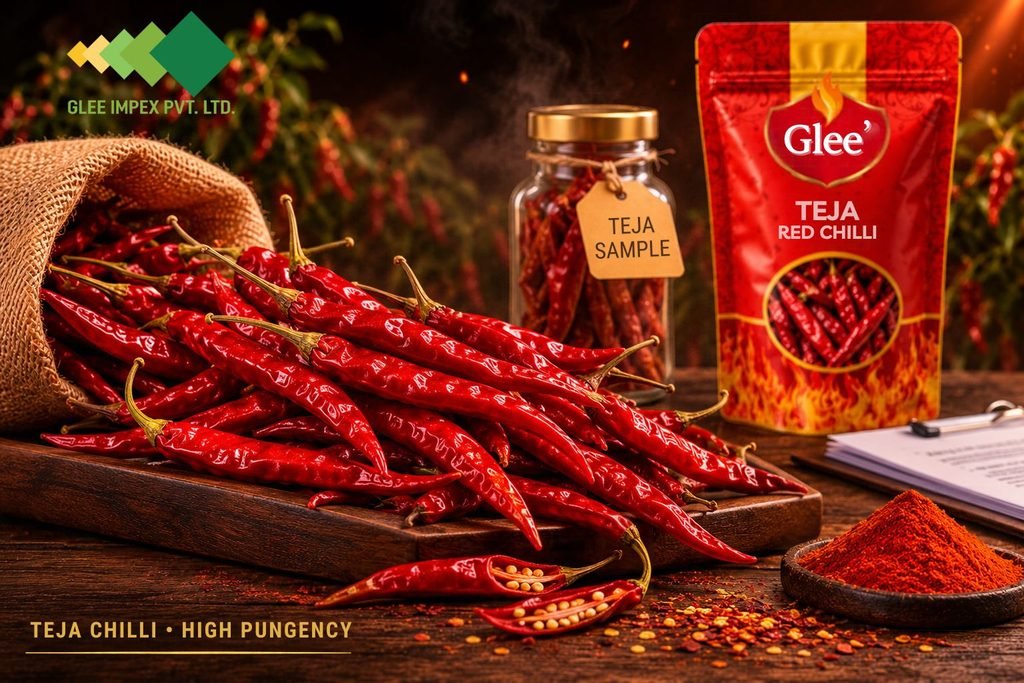
Teja chilli is one of India’s most recognised high-pungency red chilli varieties. It is especially popular among international buyers who require strong heat for chilli powder, crushed chilli, hot sauces and industrial spice formulations.
Commonly associated with the Guntur chilli-growing region of Andhra Pradesh, Teja is valued for its strong pungency and distinctive red appearance. It is generally long, slender and relatively rich in capsaicin, the natural compound responsible for chilli heat.
For buyers searching for Teja chilli for bulk import, this variety is particularly suitable for applications where pungency is more important than deep natural colour. It can be used in seasoning blends, spicy snack manufacturing, curry powders and processed food products.
The heat intensity of Teja can vary depending on cultivation conditions, maturity, drying methods and crop quality. Therefore, importers should request representative samples and laboratory test reports before finalising large-volume orders.
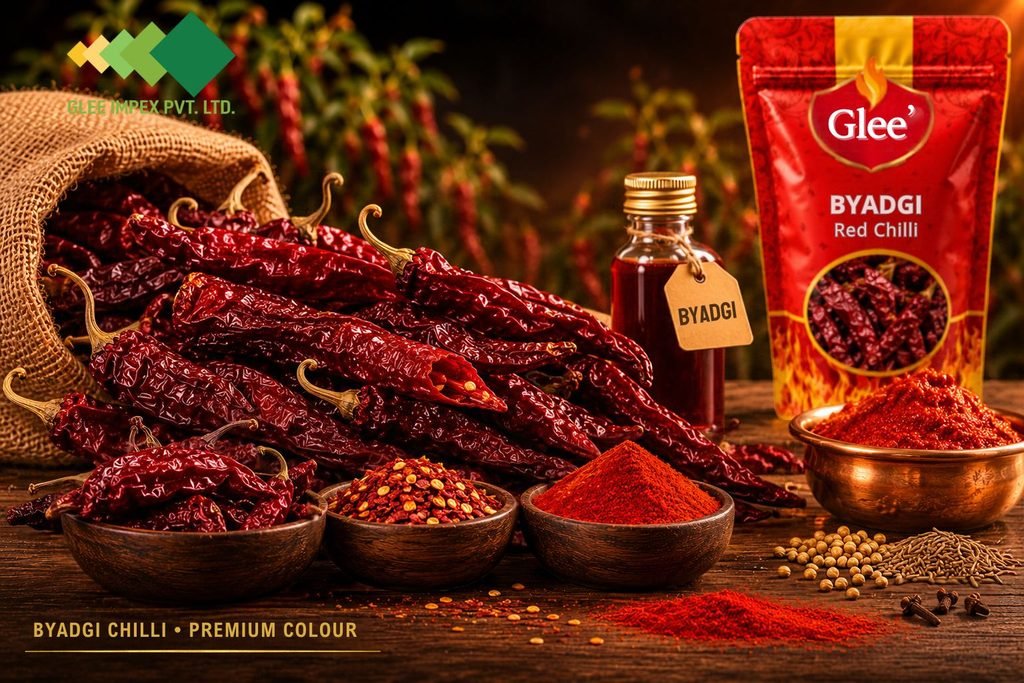
Byadgi chilli is a popular Indian variety primarily grown in Karnataka. It is widely recognised for its deep red colour, attractive wrinkled appearance and relatively moderate pungency.
Unlike high-heat varieties, Byadgi is particularly valued for its natural colouring properties. It is frequently used in Indian cuisine, commercial masala production, spice extracts and food manufacturing.
One of the biggest advantages of Byadgi chilli is its ability to provide an appealing red colour without making food excessively spicy. This makes it an attractive option for manufacturers producing products that require colour consistency and balanced flavour.
For international buyers comparing Kashmiri vs Byadgi chilli, the main consideration is the desired colour intensity, flavour profile and final product application. Both are valued for their colouring characteristics, although their physical appearance, pungency and processing performance can differ.
Byadgi chilli is particularly useful for manufacturers who want a strong natural red appearance in their finished products. Its colour quality makes it an important ingredient in traditional masalas and commercial spice formulations.
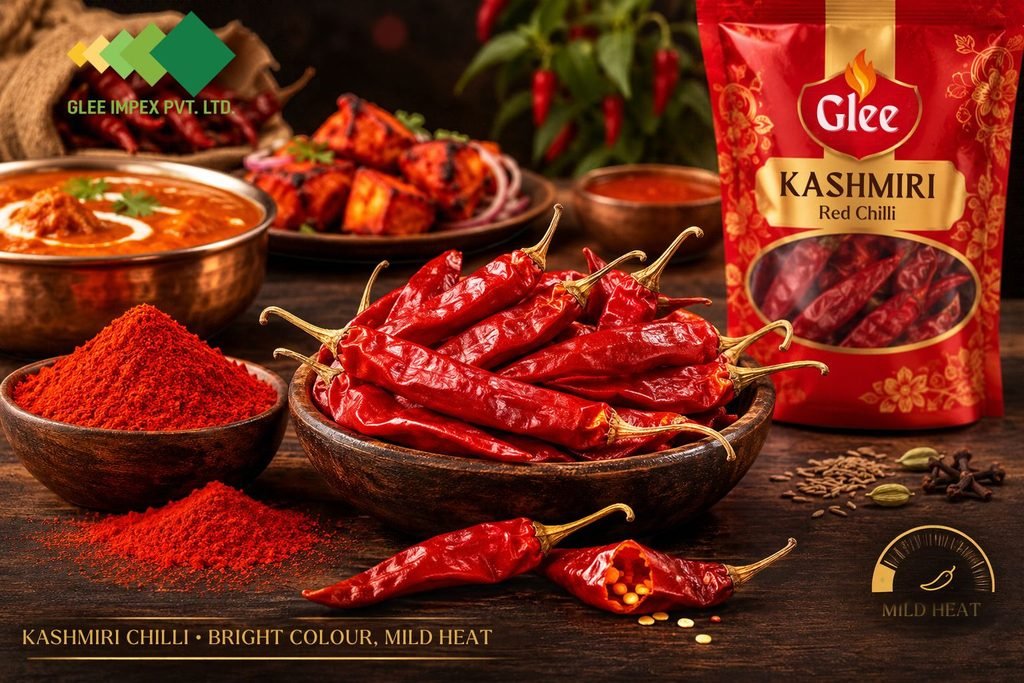
Kashmiri chilli is widely appreciated for its bright red colour, mild pungency and appealing visual appearance. It is a preferred choice for food manufacturers, restaurants and spice companies that want to enhance the colour of their products without adding excessive heat.
This variety is commonly used in Indian dishes such as butter chicken, paneer preparations, tandoori marinades, curries and traditional gravies. Its mild heat makes it suitable for products intended for consumers who prefer flavour and colour over strong spiciness.
For international importers, Kashmiri chillies offer an opportunity to develop products for markets where moderate spice levels are preferred. They can also be used in blended chilli powders to balance the pungency of stronger varieties.
When comparing Kashmiri vs Byadgi chilli, importers should consider the intended application rather than assuming that both varieties deliver identical results. Kashmiri chilli is generally preferred for its characteristic bright red appearance and mild heat, while Byadgi is particularly valued for its deep colour and suitability for colour-focused spice processing.
The final colour performance depends on the crop, drying conditions, storage and processing quality.
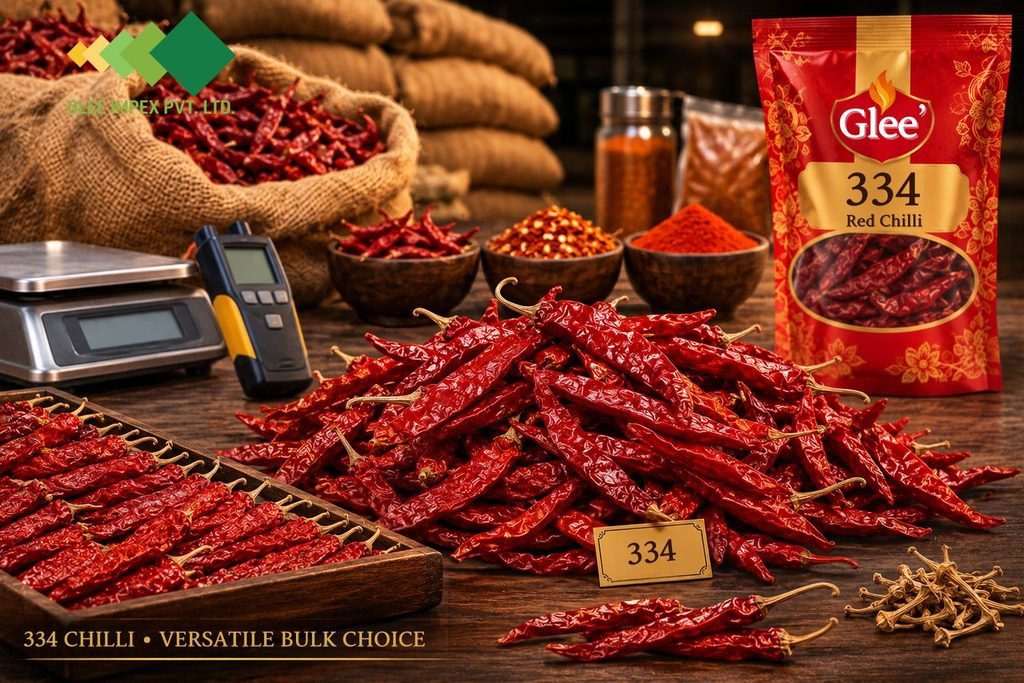
334 chilli is another commercially traded Indian red chilli variety that attracts interest from bulk buyers, spice processors and international importers. It is generally considered a versatile option for different chilli processing requirements.
Its suitability depends on the specific crop quality, pungency, colour characteristics and physical specifications offered by the supplier. Buyers commonly evaluate 334 chilli for applications such as chilli powder production, spice blending, food processing and wholesale distribution.
For importers, the advantage of considering 334 is the opportunity to source a variety according to specific commercial requirements. Rather than purchasing based only on the variety name, buyers should evaluate moisture, stem percentage, colour, pungency and cleanliness.
This is particularly important when sourcing large quantities for industrial applications, where even small differences in raw material quality can affect the consistency of the finished product.
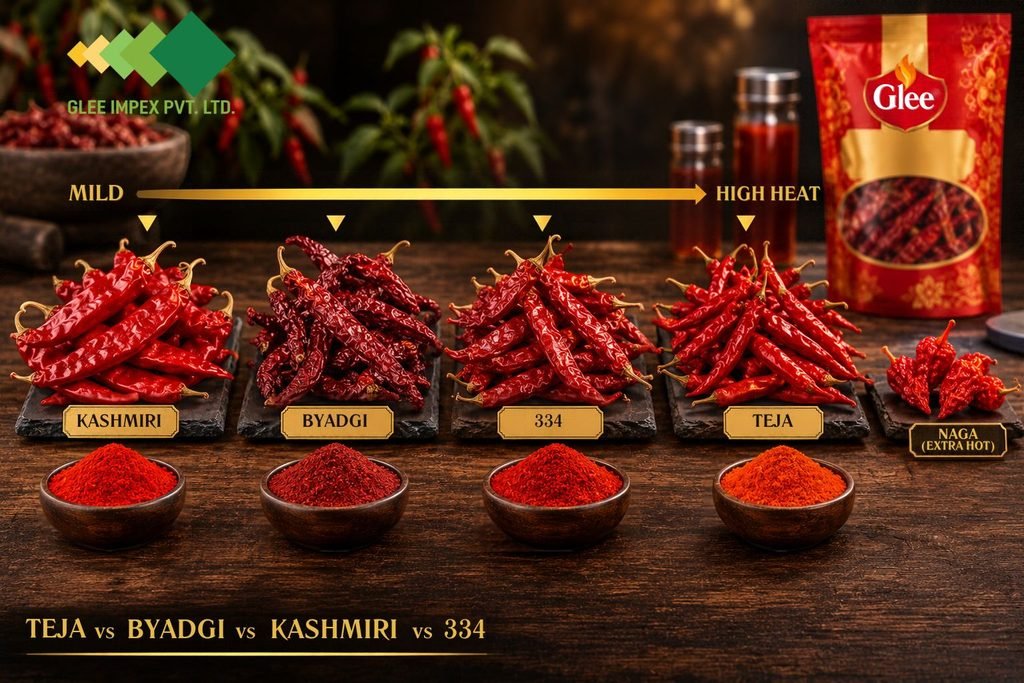
Understanding the difference between major chilli varieties is important when selecting products for international markets. Although all 4 varieties belong to the Indian red chilli category, their commercial applications are quite different.
Teja is primarily selected for high heat and strong pungency. Byadgi is preferred for its deep red colour and moderate heat. Kashmiri chilli is commonly selected for bright colour and mild pungency, while 334 is evaluated as a versatile commercial option based on its available grade and crop specifications.
For importers, the selection process should begin with the intended end use. A hot sauce manufacturer may prefer Teja, whereas a curry powder producer may require Byadgi or Kashmiri chilli. A bulk spice processor may consider 334 depending on its quality specifications and target price.
The hottest chilli in India depends on the varieties being compared and the measurement method used. Within these 4 commercial options, Teja is generally recognised as a high-pungency choice.
However, India also produces other highly pungent chilli varieties, including some varieties of Naga chilli, which can deliver substantially higher heat levels.
For commercial importers, the hottest chilli in India is not necessarily the best purchasing option. The right choice depends on the required pungency, flavour, colour and application.
A food manufacturer producing mild curry powder has different requirements from a company manufacturing extra-hot chilli sauces. Therefore, buyers should select their products according to actual application requirements rather than heat intensity alone.
The Scoville Heat Unit (SHU) is a measurement used to describe the pungency of chilli peppers. It indicates the concentration of capsaicinoids responsible for the sensation of heat.
The Scoville rating of Indian chillies can vary considerably depending on the variety, growing conditions, harvest maturity and testing methods. Teja is generally associated with higher pungency, while Kashmiri and Byadgi are commonly preferred for their colour characteristics and comparatively moderate heat.
For international trade, importers should not rely entirely on general SHU estimates published online. Actual pungency should be confirmed through suitable laboratory testing of the specific batch being purchased.
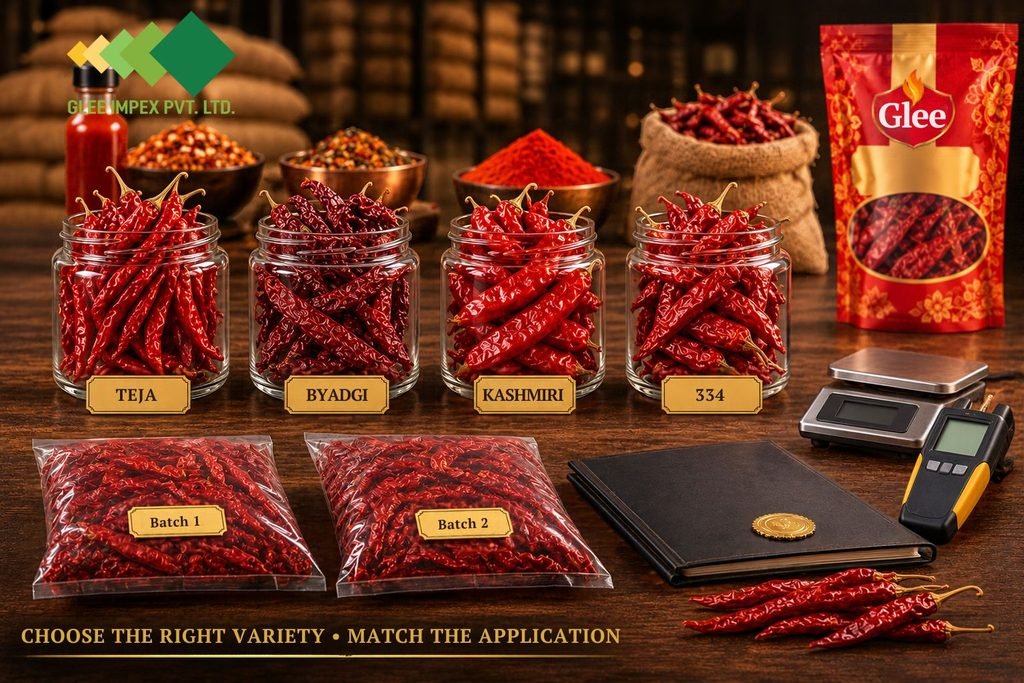
Selecting the right chilli variety involves more than comparing prices. Importers must consider the end application, customer preferences, quality requirements and local food regulations.
For example, if you manufacture hot sauces or spicy seasoning products, Teja may be an appropriate choice because of its high pungency. If your business focuses on traditional spice blends, Byadgi may provide the desired colour and flavour balance.
Similarly, Kashmiri chilli can be a suitable option for manufacturers producing mild chilli powders and colour-focused food products. Buyers sourcing raw material for large-scale chilli processing can also evaluate 334 according to the specifications required by their production facilities.
Another important consideration is consistency between shipments. A variety that performs well in one production batch should ideally deliver similar characteristics in subsequent orders. This makes supplier reliability, batch testing and proper documentation important factors in international procurement.
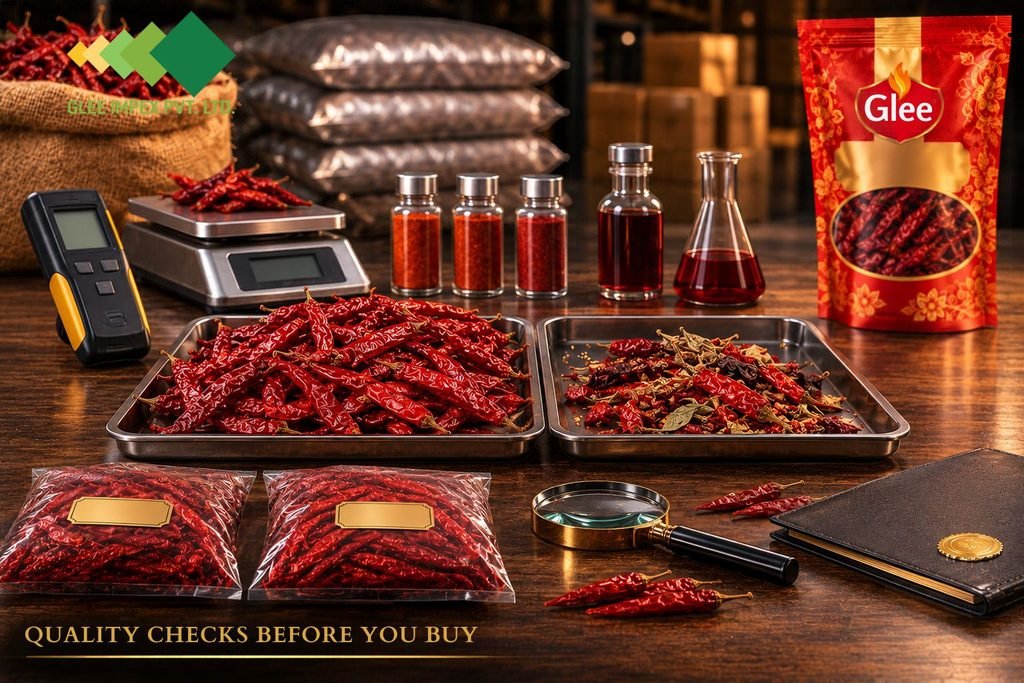
Quality inspection plays an important role in red chilli imports. Even when buyers select the correct variety, poor harvesting, inadequate drying or improper storage can affect the final product.
Moisture content is one of the first parameters to evaluate because excessive moisture can increase the risk of mould development and spoilage during transportation and storage. Buyers should request moisture specifications and ensure that the product meets the applicable import-market requirements.
Colour consistency is another important factor, particularly for Byadgi and Kashmiri chillies. Importers should evaluate the appearance of the actual batch and request suitable colour measurements where relevant.
Pungency testing helps buyers understand the actual heat level of a shipment. This is particularly important for Teja and other high-heat varieties used in industrial food production.
Physical cleanliness, foreign matter, damaged pods, stem content and overall appearance should also be inspected. Depending on the destination market, buyers may require pesticide residue testing, aflatoxin analysis, microbiological testing and other food safety documentation.
Proper packaging and moisture-resistant storage conditions are equally important for preserving product quality during international transportation.
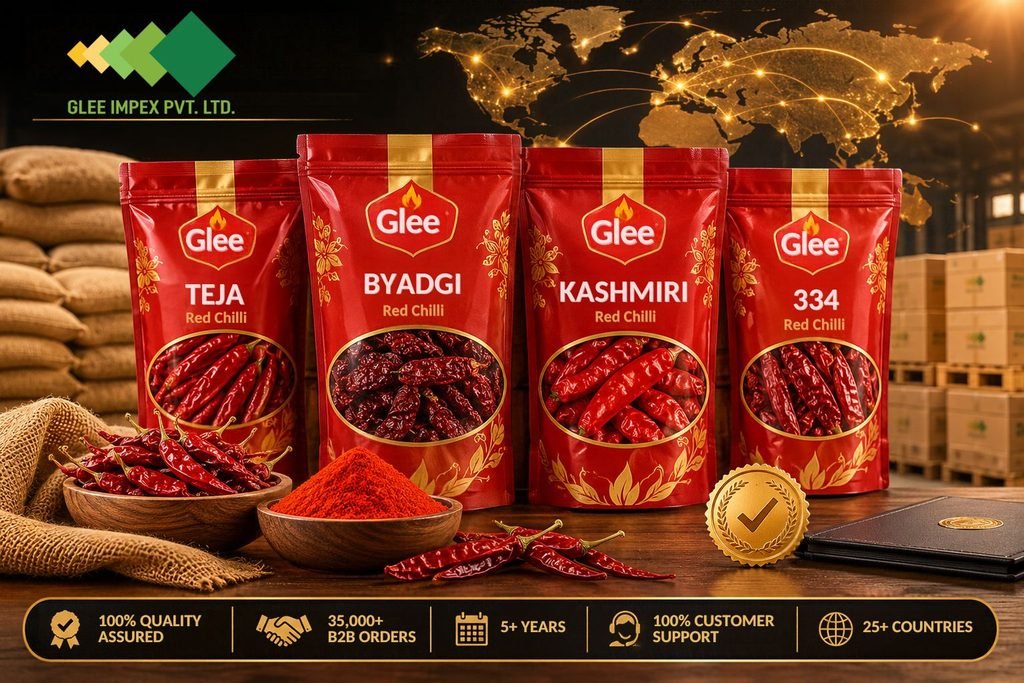
Glee Impex Pvt Ltd focuses on supplying quality-oriented Indian agricultural and spice products to international B2B buyers. We understand that importers require more than just competitive pricing. They also need reliable sourcing, product consistency, transparent communication and dependable customer support.
Our business approach is built around 100% Quality Assured products, 35,000+ B2B Orders Served, 5+ Years in Business, 100% Customer Support and business reach across 25+ Countries, as represented in our company profile.
We understand that different customers have different requirements. Some importers prioritise high pungency, while others focus on colour, processing suitability or bulk purchasing requirements.
Our objective is to help buyers identify suitable products according to their commercial needs. Whether you are interested in Teja, Byadgi, Kashmiri or 334 chilli, selecting the appropriate grade and confirming product specifications are important steps before placing a bulk order.
For international buyers, clear communication regarding product specifications, packaging, quantity, shipment arrangements and documentation can make the sourcing process more efficient.
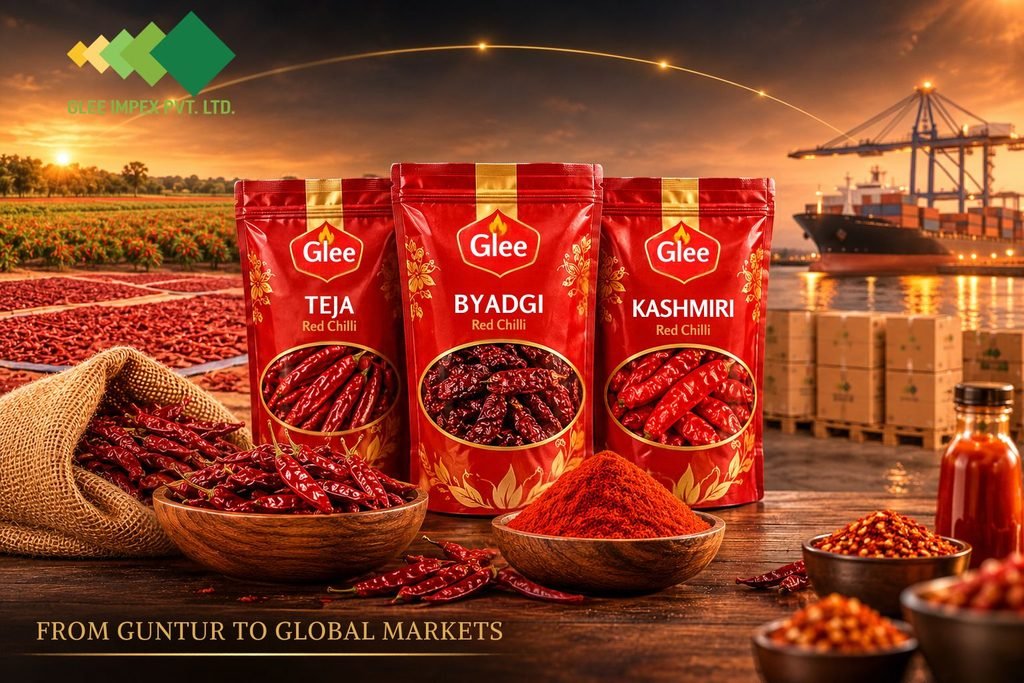
Demand for Indian spices continues to create opportunities for international wholesalers, food manufacturers, distributors and spice processing companies. Indian chillies are used across multiple food categories, making them an important raw material for the global spice trade.
The different types of red chilli in India allow importers to develop product portfolios for various customer segments. High-pungency varieties can serve the hot sauce and seasoning industries, while colour-focused varieties can support curry powder, food processing and traditional cuisine markets.
Guntur chilli is particularly relevant to international buyers exploring Andhra Pradesh’s established chilli-growing and trading ecosystem. Its commercial importance is closely associated with the region’s chilli production and availability of different pungency profiles.
However, successful importing requires careful attention to supplier selection, product testing, applicable import regulations and shipment quality control.
Working with an experienced export-oriented supplier can help buyers streamline procurement and develop more consistent sourcing arrangements.
1. Which Indian red chilli variety is best for export?
The best variety depends on the intended application. Teja is suitable for high-heat products, Byadgi for deep colour, Kashmiri for bright colour with mild heat and 334 for applications based on its specific commercial grade.
2. Which Indian chilli has the highest pungency?
Among Teja, Byadgi, Kashmiri and 334, Teja is generally considered a high-pungency option. Other Indian varieties, including certain Naga chillies, can be significantly hotter.
3. What is the difference between Teja and Byadgi chilli?
Teja is mainly preferred for its strong heat, while Byadgi is valued for its deep red colour and comparatively moderate pungency. Their commercial applications are therefore different.
4. Is Kashmiri chilli suitable for commercial food manufacturing?
Yes. Kashmiri chilli is widely used in chilli powder, curry blends, marinades and other products where bright red colour and mild heat are desirable.
5. What should importers check before ordering bulk red chillies?
Importers should evaluate moisture, colour, pungency, foreign matter, stem percentage, pesticide residues, aflatoxins, packaging and relevant export documentation.
6. How can international buyers source Indian red chillies from Glee Impex Pvt Ltd?
International buyers can contact Glee Impex Pvt Ltd with their required chilli variety, quantity, quality specifications, packaging preferences and destination country to discuss suitable sourcing arrangements.
Choosing between Teja, Byadgi, Kashmiri and 334 depends on your product requirements, target customers and processing applications. Teja is a strong option for high pungency, Byadgi is valued for deep red colour, Kashmiri offers bright colour with mild heat, and 334 provides another commercial sourcing option based on its specific quality parameters.
For importers, the most effective sourcing strategy is to evaluate actual product samples, confirm quality specifications and work with a dependable supplier.